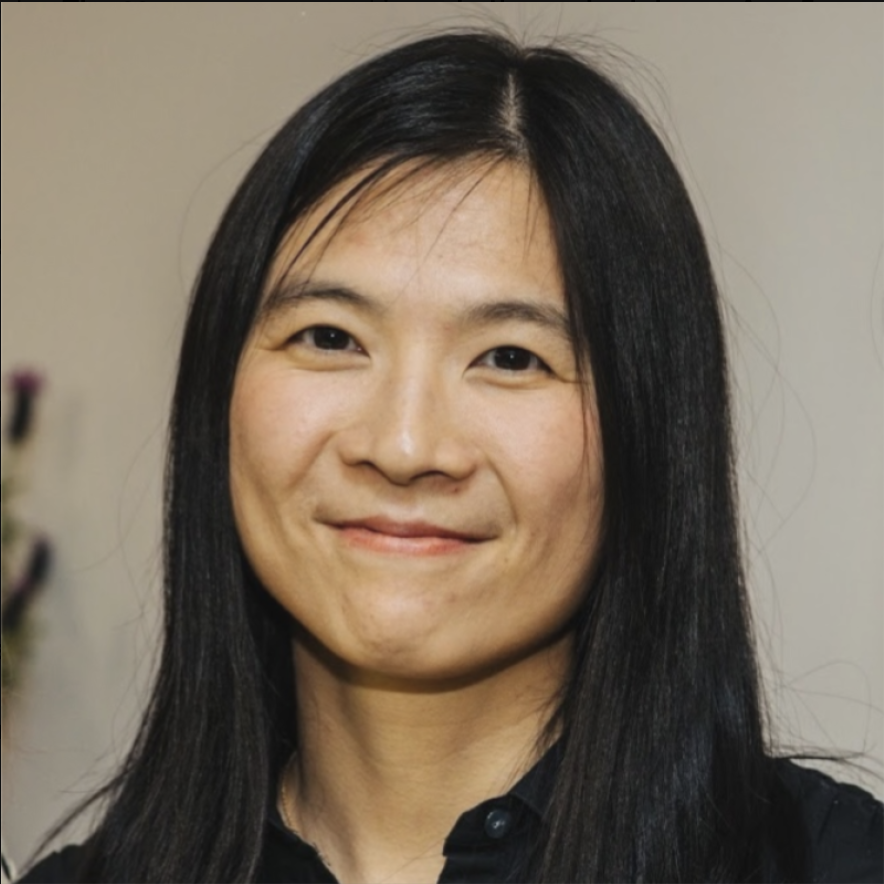
Daisy (Yinyue) Qian’s career has taken her from machine learning at FINRA to risk and NLP at American Express, data products and applied AI at Brex, and now Head of Data and AI at Spade. Today, she leads a 15-person team working on some of the more complex challenges in financial data and AI. We asked Daisy about the experiences that shaped her career, what it takes to turn AI into real business value, and her advice for women looking to grow in the field.
Career Journey
Can you tell us a little about your career journey and how you came to lead Data and AI at Spade? Were there any pivotal experiences or decisions that shaped your path?
I studied math and statistics at Peking University, then went to Cornell for a master's in financial engineering. Somewhere in that program I realized the part I loved was the data, not the finance. So right after Cornell I joined FINRA, which is where I first used machine learning on a real problem at a real job.
From there I went to American Express, where I worked on the risk team and then the Global Consumer Data Science Modeling team. That's where I got deep into text data and NLP. It was 2017 and 2018, right when transformer models came out, so I got to go from traditional NLP techniques to transformers on real data. Looking back, that was great timing.
Two moves shaped where I am now. The first was joining Brex in 2020. It was my first startup, and I ended up leading the data products team and later the applied AI team. A lot of my time went into transaction data: figuring out which merchant is actually behind a cryptic card string like "SQ *BLUE BTL 0423 NY."
The second was joining Spade in early 2024. I'd worked on this exact problem at Brex and had even evaluated a few vendors, so I knew the space and the players well. It was clear to me that Spade was ahead. What really sold me, though, was that at Spade, data is the product. The data team isn't a supporting function. What we build goes straight to customers. And I liked everyone I talked to. Nobody had a big ego, and everyone was working toward the same goal. Honestly, that's not the startup culture I expected. Fun fact: the first time Spade offered me the job, I turned it down. The timing wasn't right, and Tess, our co-founder, and I both cried. We stayed in touch, and a year later she made the offer again. Saying yes that time was one of the best decisions I've ever made.
I joined as a Data Science Manager with a team of three. Today I lead a 15-person Data and AI team, and we're looking to grow.
Turning AI into Business Value
How does your team at Spade identify where AI can make a real difference? What separates a promising use case from one that's actually worth building?
We almost always start from a customer's problem and work backward. The first question is: what will someone do differently because of this? Maybe a fraud team blocks a payment, or a card program sends a better offer. If we can't answer that, we don't build it yet.
After that, a few more questions. Does it beat the simple version? We often compare our models with plain rules, like keyword matching or merchant ID lookups, and sometimes the rules are good enough. That's a fine answer too. Can we measure what actually changed? It's easy for a model to look good on paper by predicting things that would have happened anyway. What matters is whether it changed an outcome, and you need to agree on how to measure that before you start. And does our data give us an edge? Volume helps: we see up to 1.9 billion transactions a day. But the bigger edge is knowing who the merchant really is. Card networks still only allow 25 characters for a merchant name, so a model trained on raw strings can easily mistake a coffee shop for a restaurant. Our Merchant Graph is a verified record of 99.9% of US and Canadian businesses, and Predictions starts from that instead of the raw string. When we fine-tuned it for a US bank's lending program, it beat a traditional propensity model built for the same task by 35%. The best projects are the ones where our data makes that kind of difference.
So the difference between a promising idea and one worth building usually comes down to this: the customer cares, it beats the easy option, and we've agreed on what success looks like.
Skills that matter more now
For data and AI professionals looking to grow their impact, what skills or ways of thinking are becoming increasingly important? Beyond technical expertise, what helps someone stand out and contribute at a higher level?
Even with AI, the basics still matter a lot: analytical skills, data intuition, and a solid understanding of how machine learning works. They're what let you ask AI the right questions and notice when it gets something wrong. In my opinion, even the best AI model isn't the best data scientist yet. It still falls into traps, like trusting a result that looks too good because of data leakage, or quietly joining two tables the wrong way. You need the fundamentals to catch that.
The same goes for domain expertise. Once you really know your area, you understand the nuances in your company's business logic that no model knows about. Those details usually aren't written down anywhere, so you're the only one who can bring them.
On top of that, a few skills set people apart. One is framing the problem: someone hands you a vague ask, and you turn it into a question the data can answer. Another is evaluation, meaning a test set you trust and being honest when the results aren't great. When someone tells me a model hits 92%, my next question is whether that number would hold up in front of a customer. The people who think about that before I ask are the ones who grow fastest.
It also helps a lot to be able to explain your work to people who aren't data scientists. Much of what we build ends up with our sales team or our customers. They don't care about embeddings. They care about how much fraud you caught. If you can explain your work in their words, it gets used.
Moving Fast vs. Building to Scale
How do you balance moving quickly and experimenting with building systems and processes that can scale? What have you learned along the way?
I think about it as two different modes. When we're experimenting, I want it small and cheap: a notebook, a quick test on real data. Most of those ideas won't make it, and that's expected. An idea moves to the "build it properly" stage when a customer actually needs it. Our transaction foundation model started as a research project. Once a customer had a concrete use case and a deadline, it got serious engineering time, and that work became the core of our Predictions launch.
The other side is that you can't let the basics slide while you chase new ideas. Our roadmap is split across four areas: making our core data the best it can be, building premium products, trying new things with AI, and automating our own internal work. The boring work, like QA checks, test sets, clean merchant reference data, and the right internal tools, is what makes every experiment faster later.
One more lesson: write things down. A one-page note on why we're doing something saves weeks of confusion, and it matters more as the team grows.
Leading in a Fast-moving Field
As a leader, how do you build and lead a team working in such a fast-moving field? How do you approach collaboration, decision-making, and helping people navigate uncertainty?
The tools change every few months, so I try to keep the goals steady. Every big project on my team has one clear owner, and everyone knows which customer problem it's for. If a better model comes out, we swap it in. The goal stays the same.
For decisions, I ask how hard it would be to undo. Trying a new model or tool is easy to undo, so people should just go try it. Committing to a metric with a customer, or to a system design, is much harder to walk back. For those we slow down, write it up, and bring in engineering and the commercial team early.
We also make room for trying things on purpose. One of our company goals this year is to experiment and adapt to the AI era, so we build it into our quarterly capacity planning. That way people actually get time to try new models and tools and to do research. That's how our embedding work started, along with a few other big projects. Some experiments fail, and that's expected. But a few have turned into impactful projects.
Hiring has taught me a lot too. Over time, I've looked back at how my first impressions in interviews compared with what we learned later, and that's helped me trust my gut more. I'm also clearer now about what we're looking for, including how candidates use AI tools.
When things are uncertain, I try to say so out loud. "I don't know yet, here's how we'll find out" is a perfectly good thing for a leader to say, and I want my team to feel comfortable saying it too.
Advice for women in data and AI
For women looking to build or advance their careers in data and AI, what advice would you share? Are there opportunities people should pay more attention to, or assumptions about working in AI you'd like to challenge?
A lot of what helped me came from one person. At Brex, Hoda Eydgahi was my manager for a while. As one of the few women in the room, I sometimes held back from speaking up. Hoda would notice and give me feedback right away, and she'd back me up when I did speak. She helped me make the jump from individual contributor to manager, and she pushed me to take on hard things while still respecting my choices. Having a manager in your corner like that makes a huge difference. It built my confidence, and I try to do the same for my own team now.
I'm also a working parent, and I won't pretend I've figured out the balance. I've gotten better at it over the past three years. I protect 5:30pm to 8pm every day for my family. After my kid goes to bed, I often log back on for an hour or so. Most days that doesn't feel like a chore, because I enjoy the work. Around deadlines it can definitely get stressful. What makes it work for me is caring about what I do and having the right environment and support around me.
My advice: raise your hand for more scope before you feel ready. My role grew to include customer success and data operations, which didn't look like data science at first. A lot of the impact turned out to be there.
And one assumption I'd push back on is that working in AI means training huge models from scratch. Most of the work is picking the right problem, getting the data right, and checking carefully whether the thing works. Plenty of people already have those skills and don't give themselves credit for them.
What's next
Looking ahead, what developments in data and AI are you most excited about, and how will they change the way teams work? What would you encourage professionals to learn or experiment with now?
What I'm most excited about is foundation models for financial data. Language models learned general patterns from huge amounts of text. We can do something similar with transaction histories. Instead of building one model for fraud, another for recommendations, and another for churn, you train one model that understands spending behavior and build on top of it. That's the idea behind Spade Predictions, and I think a lot of financial companies will work this way in a few years.
The other change is AI taking on everyday operational work. My team already uses it to draft reports, run QA checks, and handle repetitive analysis. For us that hasn't meant less work. People just spend more of their time deciding which problem matters and checking whether the answer is right.
If you want somewhere to start, pick one repetitive task in your week and build an AI workflow for it. Then spend time learning how to evaluate results. Once answers are cheap to produce, knowing which ones are right is what matters.
Why Spade
What makes Spade an interesting place to do this work? What kinds of problems is your team tackling, and what might someone learn by being part of a growing data and AI team?
The work my team does goes straight to customers. Companies like Stripe, Mercury, and Citizens build on our data, so when it gets better, they catch more fraud and their users get better offers. You can see the effect of your work.
The problems are hard and varied. We match messy transaction strings to real merchants, train our own transaction foundation model, use it for fraud detection and recommendations, and run the quality checks and operations that keep it all accurate day to day.
Someone joining would get to own a problem from start to finish: working out what the customer needs, building the model, proving it works, and watching it ship. We work closely with our engineering team, and almost everything we deliver to customers is something we build together. And you'd be doing it all with people who are smart, kind, and don't have big egos, which is still my favorite thing about this place.
Spade is hiring Data Scientists (and for many other roles) right now. Take a look at spade.com/careers.