The Machine Learning Myth
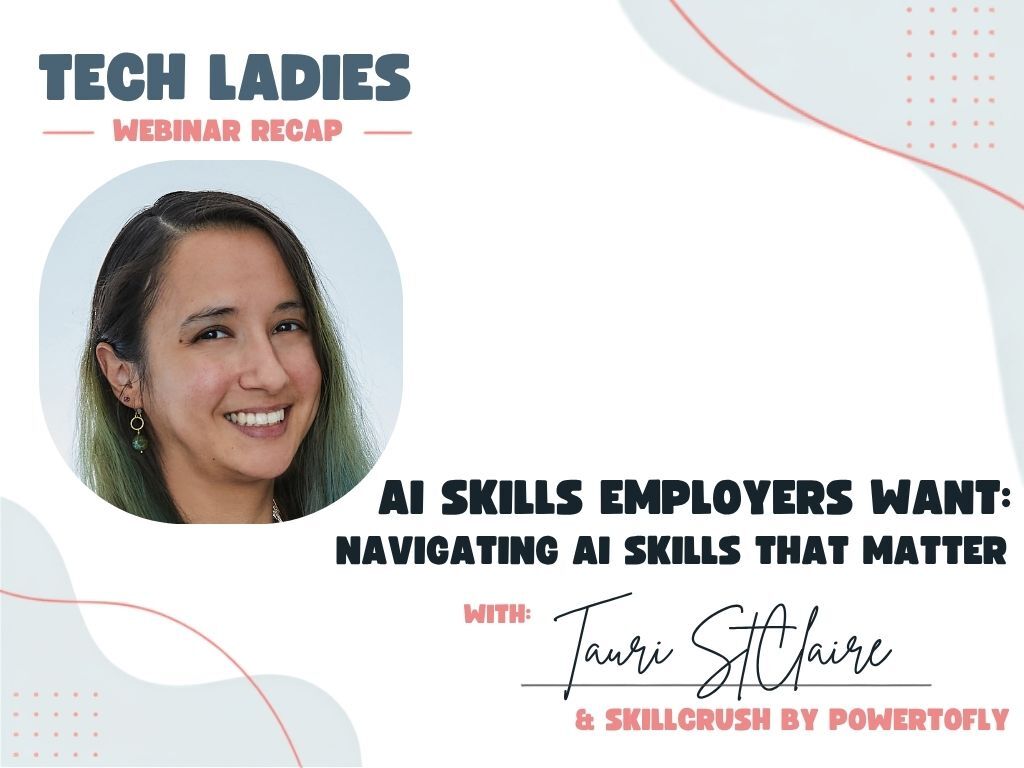
Tauri opened by addressing a common misconception: that getting into AI means you need to become a machine learning engineer. While ML powers AI models and involves heavy statistics, data structures, and computing infrastructure, it's far from the only path into this space.
For professionals eyeing AI opportunities, that opens up roles like applied AI engineers who integrate AI into programs via APIs, prompt engineers who use prompts to craft the instructions and constraints that govern how an AI system behaves, AI operations specialists who implement AI tools across business workflows, and AI ethics specialists who ensure responsible deployment. These roles don't require you to understand the mathematical foundations of neural networks, but they do require you to understand your area of expertise deeply and know how to make AI useful within it.
AI as a Multiplier, Not a Replacement
One of the most grounded points came from Tauri's emphasis on using AI intelligently and with the unique value of human contribution in mind . She referenced research from Deloitte showing that companies leading with "human first" approaches see better gains from AI than those going "AI first." The sweet spot is what Deloitte calls "human X AI"—using AI to multiply what humans bring to the table.
This applies to all roles, even technical roles like software engineering with AI. Addy Osmani, director at Google Cloud AI, put it plainly: "AI can get you 70% of the way there, but the remaining 30% requires knowledgeable developers." Skilled engineers don't just accept AI-generated code—they're constantly refactoring it into focused modules, adding edge case handling, strengthening type definitions, and questioning architectural decisions.. AI works best when guided by people who genuinely understand the challenges, variables, and nuances of their work.
Where AI Fits Into Real Work
For non-technical roles, AI is already being integrated into workflows in practical ways: drafting emails and content, analyzing trends and data, automating repetitive processes, and designing databases specifically for AI tools . These applications don't require programming skills, but they do require domain expertise and thoughtful implementation, especially when it comes to security risks and maintaining the accuracy of information given for legal, financial, or medical purposes. .
On the technical side, applied AI development is where the opportunities are exploding. Companies like Microsoft (with 365 Copilot across Word, Excel, and Teams), Duolingo (using GPT-4 for conversational practice that adapts to learner levels), Khan Academy (building an AI tutor trained on their specific Socratic teaching methods), Notion, Stripe, Wix, and GitHub are all hiring applied AI developers. These aren't machine learning researchers—they're engineers who know how to curate Large Language Model power to make apps and software that bring more value to their users.
Tauri walked through what that skill set actually involves: efficient model usage patterns, client-side security to protect API keys and user data, performance monitoring to catch latency and quality issues, working with embeddings and vector databases to structure searches effectively, and designing dynamic prompts that enforce structured outputs. It's a multifaceted specialty that sits at the intersection of development, data, and intelligent system design.
Using AI Ethically and Sustainably
Tauri didn't shy away from the harder conversations. Large language models consume massive amounts of energy, water, and electricity, so there's a real environmental cost to processing requests. On the financial side, token usage adds up quickly, especially with complex tasks. A real opportunity comes from embracing that the most valuable employees know when to use AI, and when their own expertise is faster, cheaper, and more effective.
She encouraged attendees to learn about prompt writing to avoid bias, discerning when AI outputs and working datasets are perpetuating bias , and advocating for accessibility and fairness in algorithms. Resources she recommended to keep apprised on AI ethnics include the Algorithmic Justice League, Distributed AI Research Institute, Harvard's Public Interest Tech Lab, and podcasts like Ethical AI and Are You a Robot on Spotify. Skillcrush by PowerToFly also offers an Inclusive AI Usage class on Udemy for anyone looking to go deeper.
What Employers Actually Want
Employers are looking for professionals who use AI to work more efficiently, increase the outreach of their expertise, and ultimately bring more value to their customers and clients. This requires getting comfortable with AI to prototype faster, generate initial drafts they can refine with expertise, explore alternative approaches to known problems, and automate truly routine tasks—all applying oversight to insure good outcomes. AI has a multiplying effect on existing skills. The more you understand your craft, the more effective you'll be with AI.
Tauri also warned against cognitive dependence. When you let AI do all your writing or decision-making, those skills atrophy. Studies show that constantly relying on AI replace your process diminishes your own decision-making abilities, which actually makes you less valuable as an employee.
Building AI Skills From Where You Are
The webinar wrapped with Tauri encouraging attendees to identify where AI naturally fits into their existing niche. You don't need to abandon your expertise to pivot into AI—you bring your expertise with you.
For those interested in upskilling, Skillcrush offers an AI Developer Track that teaches front-end foundations, backend development, and building complex generative AI apps with tools like Langchain. They also have a Get Hired Program with one-on-one career coaching, resume and LinkedIn reviews, mock interviews, and weekly group sessions—available as a standalone or paired with technical training. Tech Ladies members get 10% off using the links above.
Key Takeaways
- Most AI jobs work with existing models, not building them from scratch—applied AI development and skillful AI tool usage is where the hiring demand is
- AI multiplies your existing expertise; it doesn't replace the need to understand your craft deeply
- Use AI to prototype, draft, and automate routine tasks, but always verify, refine, and apply your judgment
- Avoid cognitive dependence—use AI to help you think, not to do your thinking for you
- Learn to use AI ethically and sustainably; understand bias, accessibility, and the real costs of token usage, both financial and environmental
- Employers want professionals who know when to use AI and when their own processing power is more efficient
- Companies like Microsoft, Duolingo, Khan Academy, and Notion are hiring applied AI developers who can integrate LLM capabilities into user-facing products
- The best entry point is identifying where AI fits naturally into your current role or area of interest, then building from there
You can watch the full recording to catch all of Tauri's insights, examples, and Q&A with the community.
Skillcrush offers an AI Developer Track that teaches front-end foundations, backend development, and building complex generative AI apps with tools like Langchain. They also have a Get Hired Program with one-on-one career coaching, resume and LinkedIn reviews, mock interviews, and weekly group sessions—available as a standalone or paired with technical training. Tech Ladies members get 10% off using the links above.



.png)
.png)